Food and Drink
 |
||
|
Unidad 6: Comidas y bebidas
|
||
 |
||
|
Build your vocabulary! Click here to see vocabulary for the entire unit. |
||
|
6. A. I'm hungry. How about you? |
||||
¿Qué hay en la cocina ?
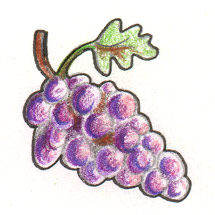
Hay muchas frutas - manzanas , naranjas , plátanos y uvas Muchas means many. It is used as an adjective (describes a noun, frutas) so it is feminine and plural, thus the ending of -as.
Plátanos are also called bananas in many countries. In Puerto Rico, they say guineos. Some people even say banano. That's a lot of words for one fruit!
|
||||
¿De qué color son las manzanas?
-¡Rojas! ¿De qué color son las naranjas ? -¡Anaranjadas! ¿De qué color son los plátanos? -¡Amarillos por fuera y blancos por dentro! ¿De qué color son las uvas? -¡Verdes pero me gustan más las moradas! Naranjas are called chinas in Puerto Rico. So, zumo de naranja (orange juice) in Spain is called jugo de china in Puerto Rico! |
 |
|||
Hay también muchas verduras -
lechuga,
judías verdes,
zanahorias y brócoli
.
Me gustan mucho las papas y las judías verdes. Son muy ricas y sanas . A mi padre no le gusta el brócoli y odia las zanahorias. A veces él no es muy sano. Papas is used in Latin America and patatas is used in Spain.
Odia means he hates. It is even stronger than No le gusta(n). By the way, did you notice that with a single thing you say Me gusta but with a plural you say Me gustan? For example, No me gusta el brócoli pero me gustan las papas. |
||||
A mi madre le gusta mucho el pan y le gustan más los bollos. También le gusta el café.
¿Qué hay en el refrigerador? Hoy tenemos agua, jugo, leche, yogur, mantequilla, carne, pollo y pescado. A veces bebemos refrescos pero normalmente tomamos agua, leche o jugo. En España, ¿de qué color es la mantequilla? -¡Amarilla!
Did you know that in some European countries butter is white? However, in most Spanish-speaking countries it is yellow as in the U.S. but sometimes people cook with lard which is white. Do you know what many Spaniards use instead of butter for cooking? Olive oil. Most of what is sold in the U.S. comes from Spain or Italy. |
 | |||


 |
||||
|
6. B. Meal times |
||||
|
Every culture eats meals but of course not always at the same time of the day or the same amounts of food. |
||||
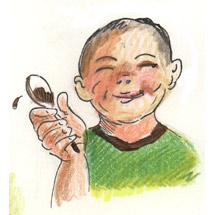
| Son las siete y media de la mañana. ¡Es la hora de desayunar! En España y en otros países latinos desayunamos por la mañana. Como muchas personas yo bebo leche con cereales o leche con bollos. A mi hermano le gustan los dulces. A mis padres les gusta el café. Son las dos de la tarde. ¡Es la hora de comer! Entre la 1:30 y las 3:00 comemos/almorzamos. ¡Es la comida más grande del día! |
 | |||
Mi madre hace tres platos:
El primer plato normalmente consiste en sopa, verduras, pasta o arroz. El segundo plato es carne o pescado. El tercer plato es el postre. De postre comemos fruta o yogur. Son las nueve de la noche. ¡Es la hora de comer! Por la noche, a las 9:00 o 10:00 cenamos. Comemos una tortilla de patata, carne o pescado. La tortilla en España es una mezcla de huevos con otros ingredientes, como jamón, queso o verduras. Esta comida es más ligera que el almuerzo. ¿A qué hora comes tú?
When you want to put things in order in Spanish you use: primer(o/a), segundo/a, tercer/a.
Arroz is rice. Not only is rice a common side dish, it is also used for pudding with cinnamon and a delicious hot weather drink called horchata.
La tortilla española is not to be confused with a Mexican tortilla. A Spanish tortilla is similar to a very large omlette but served at room temperature. In Mexico, as you probably know, a tortilla is like a very thin flat bread made of corn or flour. It is used to roll foods for eating as Americans do a sandwich. The contents can be warm or cold.
Esta comida es más ligera que el almuerzo. In Spanish-speaking countries people eat smaller meals at night than in the afternoon. |
||||


|
||||
|
6. C. Let's go out to eat. |
||||
Cuando es mi cumpleaños vamos a un restaurante a celebrarlo.
En verano, me gusta sentarme afuera. Pido una mesa para 5. El camarero nos trae los menús. ¡Todo parece muy rico! Mi hermano pide pollo y mi padre pide pescado. A veces yo pido paella.
Pedir means to order or to ask for.
Muy rico(a) is used to describe a good tasting food or it can also means rich as in wealthy. In some Spanish-speaking countries when something tastes good people say ¡Nam nam! |
||||

|
||||
|
6. D. Utensils |
||||
Mi hermana pequeña a veces me molesta. Intento no enfadarme con ella.
En el restaurante ella lo tira todo. Le pido a la camarera una cuchara limpia, un tenedor, un cuchillo y una servilleta. Toda su comida está en el suelo. ¡Está muy sucio! Ella lo tira todo means she throws everything.
Limpio and sucio are opposites (clean and dirty). |
||||
|
6. E. Open vs. closed |
||||
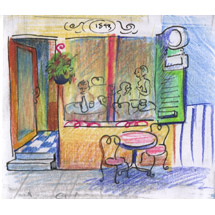
| Los restaurantes están abiertos muchos días en España. A veces, durante días de fiesta, los domingos y los lunes están cerrados. ¿Cuando abren o cierran los restaurantes en tu país? ¿Sabías que...? |
 | |||
|
The 24-hour clock is not used in the U.S. except in the military but it is used in England and in other parts of Europe and many other countries. |
||||
|
In Spanish-speaking countries people use a 24-hour clock instead of a 12-hour clock especially when giving the schedule for opening hours of a restaurant, building or shop. Click here to see an example in a photo. It is also used in written things like train and other transportation schedules. Sometimes people even speak using the 24 hour clock but in many cases when talking they refer to times of the day as we do in English with "in the afternoon" or "in the evening" to clarify. |
||||
|
6. F. Problems |
||||
Nosotros tenemos alergias.
Mi hermano no puede comer pescado. Yo soy alérgico(a) a la leche. ¡Por favor, mi hermana pequeña no puede comer los huevos! Me encanta el yogur pero no lo puedo comer. En el restaurante debo preguntar : "¿ Cómo preparan ...?" "¿ Lleva leche?" ¿Alguien a quién tú conoces tiene alergias? Me encanta is even stronger than Me gusta. It means "I love"as in I love yogurt.
Debo preguntar means I should ask.
¿Cómo preparan...? ¿Lleva leche? How do you prepare/ does it have milk?
|
||||

Constructing New Meanings
Juggling Your New Knowledge

Culture Reading
Geography Reading
Writing activity

Web photos
You did very well. Go on to Unit 7. See you soon!
©2006 Tree Frog Publishing
Reproduction of this web site or its contents by any means is not permitted.