|
2. A.Saying what you do. |
|
Yo
hablo
un poco de/ algo de/ bien/ .Yo
estudio
.
inglés español, alemán, francés, italiano, chino, japonés, coreano,
hebreo, ruso, portugués, polaco, árabe
You do not capitalize the names of languages in Spanish. These listed are: English, Spanish, German, French, Italian, Chinese, Japanese, Korean, Hebrew, Russian, Portuguese, Polish
and Arabic
|
|
Yo leo. libros, revistas,
guías de viajes, el periódico,novelas de misterio
Yo veo... la televisión,películas de vídeo, películas de DVD
Yo escucho... música,
discos compactos, la radio |
 |
|
|
|
To make the verb negative in Spanish, you simply put no in front of it! |
|


 |
|
|
2. B.Asking questions. |
|
¿Hablas español? -Sí hablo español./ No, no hablo español./ No, no hablo mucho
español.
¿Hablas inglés? -Sí hablo inglés./ No, no hablo inglés./ No, no hablo mucho inglés.
¿Lees? ¿Qué lees?
¿Ves la televisión? ¿Qué ves en la televisión? - Sí, veo la televisión. |
 |
¿Escuchas música? ¿Qué música escuchas? - Sí, escucho la música.
|
|
|
2. C.Likes and dislikes. |
|
Me gusta /
No me gusta
jugar
con/ jugar a los deportes, jugar a los videojuegos,
estudiar, leer, hablar,
escuchar, viajar,
usar
la computadora, nadar, ir a restaurantes, pasar
tiempo con mi familia, los perros/ los gatos |
ir a... el cine,
de compras,
comprar cosas, partidos, la casa de un amigo,
otros
países, la playa,
las montañas, el lago, el río, el mar, el océano
Me gusta has the same meaning as I like in English.
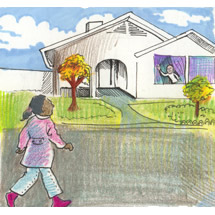
Ir al cine means to go to the movies. Ir al lago means to go to the lake. When you have a + el it becomes al.
Tip: It is good to always memorize the article (el, la, los, las like the English the or un, una, unos, unas,
like the English a or some) when you learn a word. But, it is also very, very helpful to remember whole
expressions like ir al lago.
|
 |
|


 |
|
|
2. D.Needs and wants. |
|
|
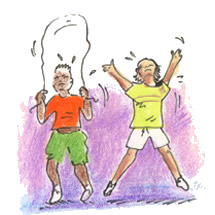
Quiero means I want and necesito means I need. You can use these with things or with verbs. They are
very easy! |
 |
|

 |
|
|
2. E.Weather and activities. |
|
|
Puedo means I can. You will see this again in many later lessons.When you talk about the weather being hot or cold you say hace, when you talk about yourself feeling hot or cold, you say tengo.
|
|

 |
|
|